Watercolor Baby Christmas Mouse Clipart Review
When I first opened the Watercolor Baby Christmas Mouse Clipart, my immediate thought wasn't about stitch counts or file formats. It was about the mood. There is a specific kind of magic in watercolor illustrations that feels soft, organic, and incredibly inviting. For an embroidery designer, that initial visual impression is critical because it dictates how the final stitched product will feel to the customer. This piece isn't just a digital image; it is a potential centerpiece for a holiday collection, a personalized gift, or a boutique item that needs to stand out on a crowded shelf.
I have spent years reviewing design assets for real-world applications, from custom sweatshirts for local teams to delicate baby bonnets for high-end boutiques. My job is to translate what looks good on a screen into something that holds up under the tension of a sewing machine needle. So, let's talk about how this Illustrations category entry performs when we move from the computer monitor to the hoop.
The First Stitch: Visual Personality and Mood
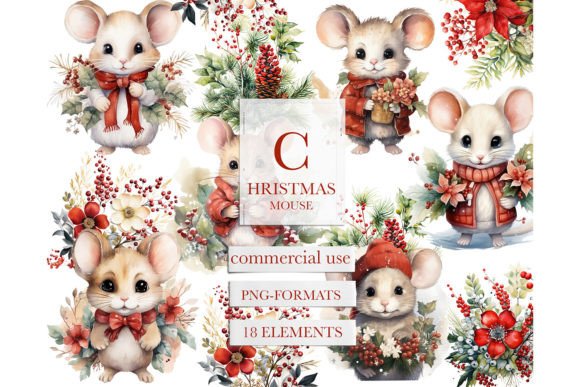
The strength of the Watercolor Baby Christmas Mouse Clipart lies in its gentle aesthetic. The watercolor style naturally lends itself to softer edges and blended hues, which translates beautifully into thread work. Unlike rigid vector graphics that can sometimes look stiff or overly sharp after digitizing, this design has a dreamy quality that invites texture. It creates a sense of warmth and nostalgia that is perfect for the holiday season.
In terms of layout, the composition feels balanced. It doesn't scream for attention but rather whispers a story. When I imagine this on a finished product, it suggests a handmade touch that buyers are currently craving. It fits perfectly into the narrative of "slow fashion" and artisanal goods. Whether you are an Etsy seller looking to refresh your shop or a craft fair vendor preparing your booth, this design offers a professional yet approachable vibe that resonates with customers who value uniqueness over mass production.
Real-World Application: From Screen to Tote Bag
To truly evaluate this asset, I like to run a mental simulation based on actual projects. Let's say I am preparing a custom embroidered tote bag for a small business client who specializes in holiday gifts. They want something unique that screams "Christmas" without being cliché. The Watercolor Baby Christmas Mouse Clipart would be an ideal candidate here.
Imagine a natural canvas tote bag. The soft, pastel tones of the mouse illustration would pop against the neutral background without overwhelming the fabric. The watercolor effect could be interpreted through a mix of satin stitches for the outlines and fill stitches for the colored areas, creating a subtle depth that mimics the original artwork. Customers receiving such a bag would likely perceive it as a high-quality, thoughtful gift. The design elevates the perceived value of the tote, making it feel less like a generic promotional item and more like a curated accessory.
This same logic applies to baby items. A onesie or a soft blanket featuring this clipart would be a hit for new parents. The theme is innocent and festive, making it suitable for nursery decor or holiday photoshoots. If you are a maker focusing on embroidery project customization, this design allows you to create personalized products that feel bespoke. The versatility extends to aprons, kitchen towels, and even pillow covers, offering endless possibilities for your craft business.
Navigating Technical Challenges and Limitations
However, every designer knows that beauty comes with technical constraints. While the Watercolor Baby Christmas Mouse Clipart is visually stunning, there are scenarios where it requires careful handling. One of the primary concerns is the level of detail inherent in watercolor styles. These designs often rely on fine lines and subtle color transitions that can get lost if not executed correctly.
If you are working with a small hoop size, you might find that the intricate details of the mouse's features become muddy. Tiny lettering or very fine decorative accents may require a higher stitch density than usual to maintain clarity, which can lead to puckering on thinner fabrics. Similarly, textured fabrics like heavy denim or chunky knits can obscure the delicate nature of the watercolor effect. In these cases, the design might lose its charm and appear cluttered rather than elegant.
Stretchy fabrics present another hurdle. Without proper stabilization, the tension required to render the smooth curves of the watercolor style can cause the garment to distort. Dark fabrics also pose a challenge; the lighter colors typical of this palette might not show up vividly unless you use a high-quality underlay or a specific thread choice. For curved surfaces like caps, the distortion of the design during stitching must be accounted for in the digitization process. If you are planning to use this for commercial embroidery, you must test the design thoroughly before committing to a large batch.
Practical Designer Notes for Success
Before you start stitching, there are several steps I always recommend taking to ensure your finished product meets professional standards. First and foremost, always test the design on scrap fabric that matches the weight and stretch of your final material. This simple step can save you hours of frustration and wasted materials.
Check your thread color contrast carefully. The success of a watercolor-style embroidery often depends on the interplay between different shades. Ensure that your chosen threads provide enough definition to separate the elements of the mouse from the background. Review the stitch density settings; too much density can make the fabric stiff and ruin the drape, while too little can leave gaps that reveal the underlying fabric unevenly.
Confirm your hoop size early in the process. A design that works on a 5x7 hoop might need resizing or re-digitizing for a smaller 4x4 hoop. Inspect small details closely, especially around the ears and eyes, to ensure they remain distinct. It is also wise to test the design in black and white mockups to see how the value structure holds up without the distraction of color.
Don't forget to check whether the design works for both personal and commercial projects. Licensing terms vary, and using a design for resale without the proper rights can lead to legal issues. Confirm the license before selling small shop product listings or including it in printable mockup bundles.
Final Thoughts on Design Value
The Watercolor Baby Christmas Mouse Clipart is more than just a pretty picture; it is a strategic asset for designers who understand the nuances of translation from digital to textile. It has the potential to enhance brand consistency and boost buyer engagement by offering a product that feels authentic and handcrafted. When used correctly, it builds customer trust and elevates your reputation as a serious creative entrepreneur.
Whether you are creating an embroidered patch, a tote bag design, or a sweatshirt embroidery piece, this clipart offers a strong foundation. Just remember that the key to success lies in preparation. Test your stabilizers, experiment with thread colors, and respect the limitations of your equipment. By doing so, you can transform this digital asset into a tangible masterpiece that brings joy to recipients and satisfaction to your business.
For those of you diving into the world of digital embroidery files, keep in mind that the right design is only half the battle. The execution determines the outcome. Take the time to refine your technique, and you will find that the Watercolor Baby Christmas Mouse Clipart becomes a staple in your repertoire for holiday collections and beyond.